
Centre Point Medan — Designing Digital Wayfinding for Mall Navigation and Tenant Discovery

Shopping mall with a wide variety of retail, dining, and entertainment tenants.
 Product
Wayfinding & Directory System
 Role
RoleProduct Designer (End-to-end)
 Timeline
Feb 2026 - Mar 2026
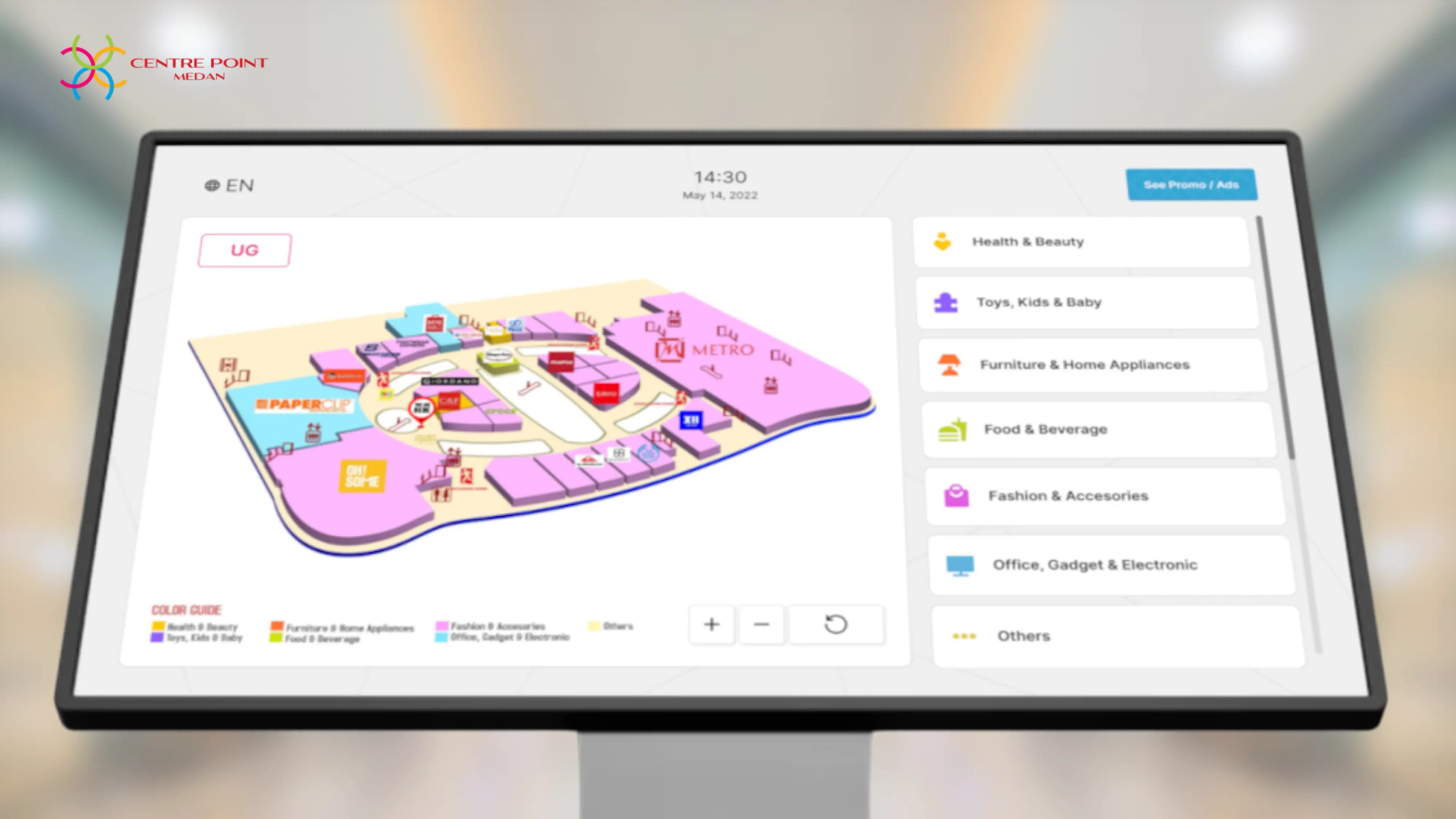
CPM Digital Wayfinding & Directory
Context
This project was commissioned to design a digital mall directory & wayfinding experience for a landscape-oriented kiosk display, helping visitors quickly locate stores and facilities while integrating promotional content and mall advertisements into the experience.
Understanding Directory Systems
Existing mall directory experiences were reviewed to understand how information is organized within public kiosk environments. The observations highlighted common approaches for destination discovery, location awareness, and navigation, helping inform the direction of the final solution.
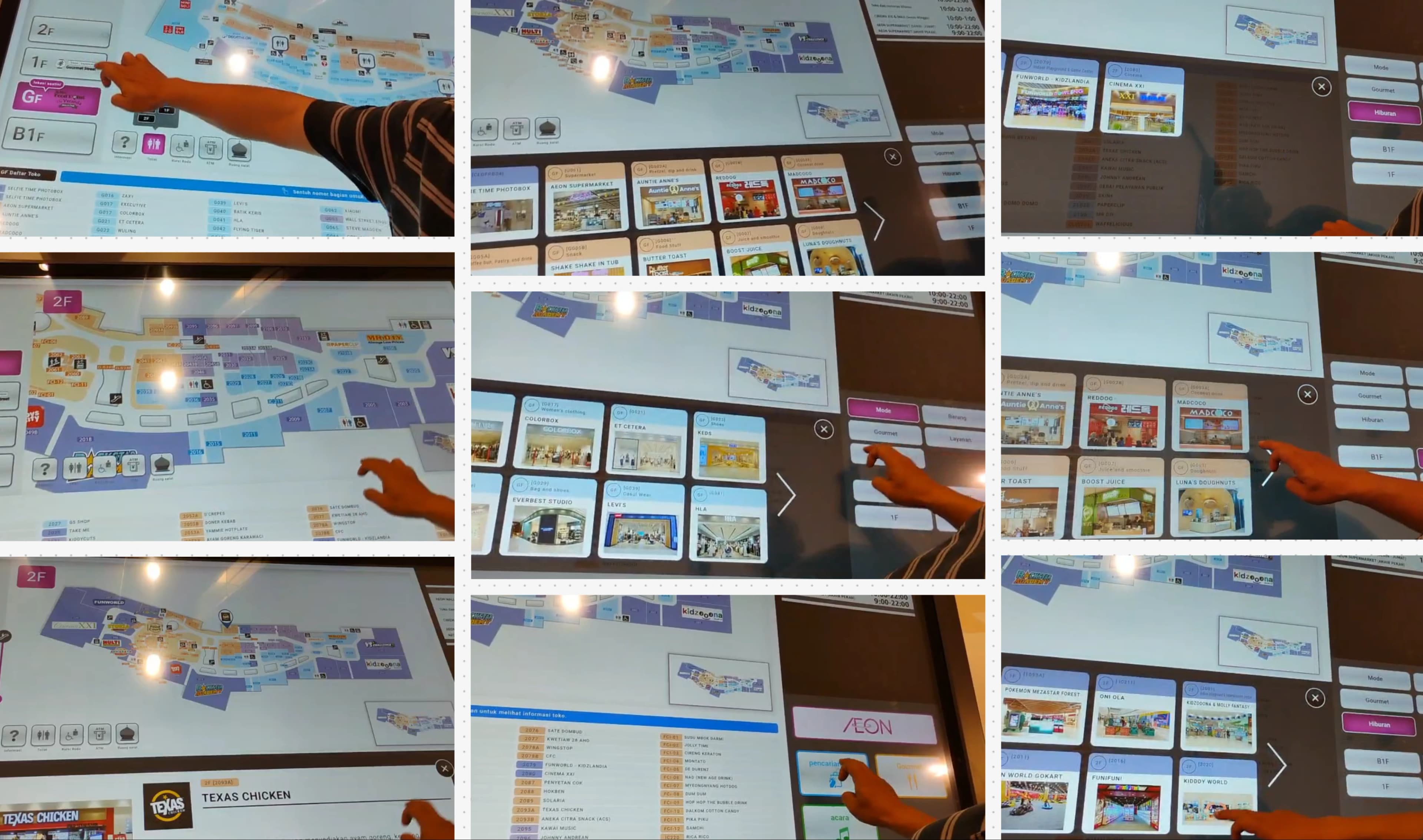
Category-based organization helps visitors discover stores and facilities more efficiently.
Visual cues such as color coding can improve information scanning and recognition.
Clearly indicating the user's location provides essential spatial context within the directory.
Layering information helps reduce visual complexity and supports focused decision-making.
Final Design
The final design translates these observations into a unified directory and wayfinding experience, helping visitors discover destinations, understand their surroundings, and navigate the mall more confidently.
Supporting Destination Discovery
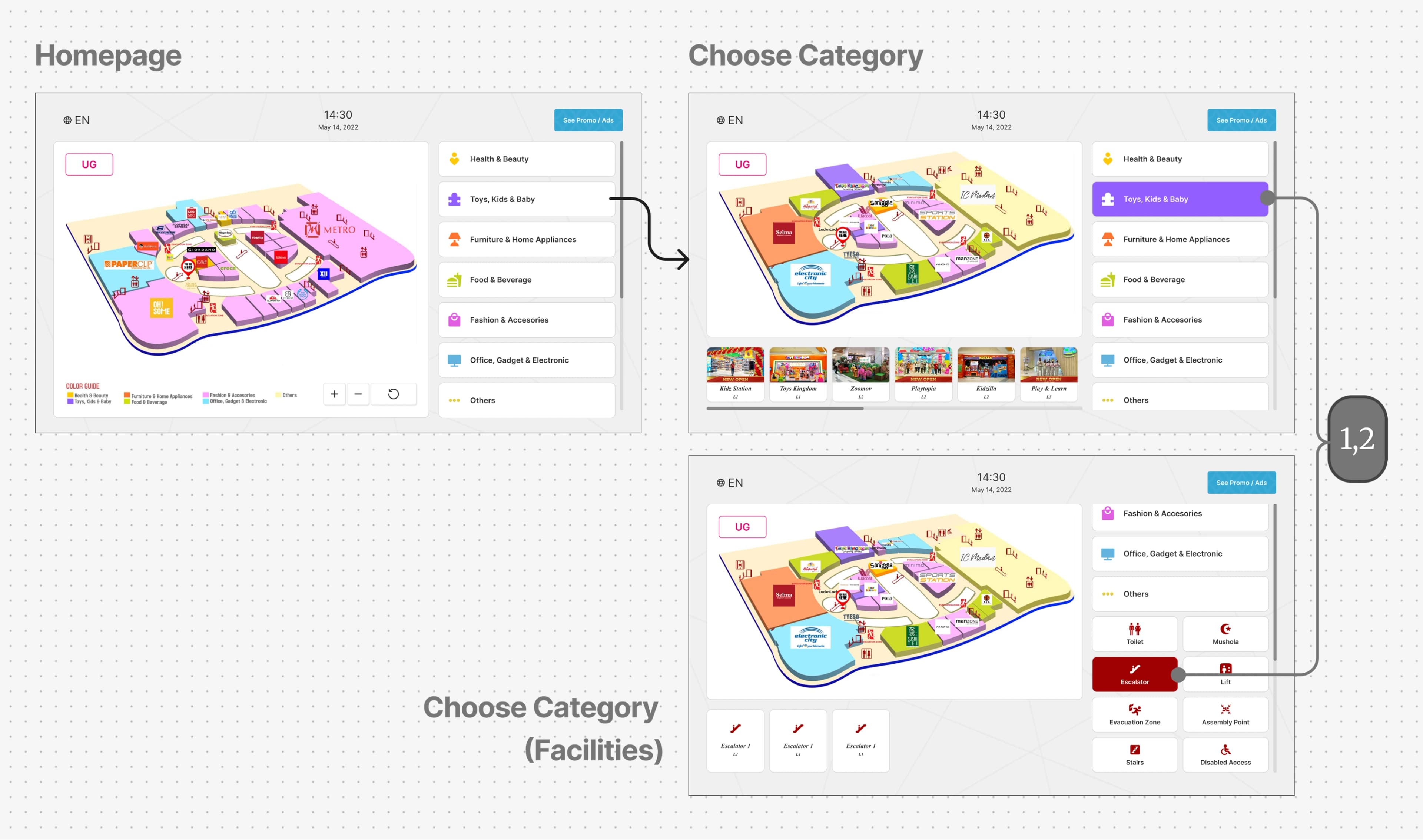
Stores and facilities are organized into familiar categories, making destinations easier to discover and browse.
Recognizable icons enable faster category recognition and reduce scanning effort.
Improving Spatial Understanding
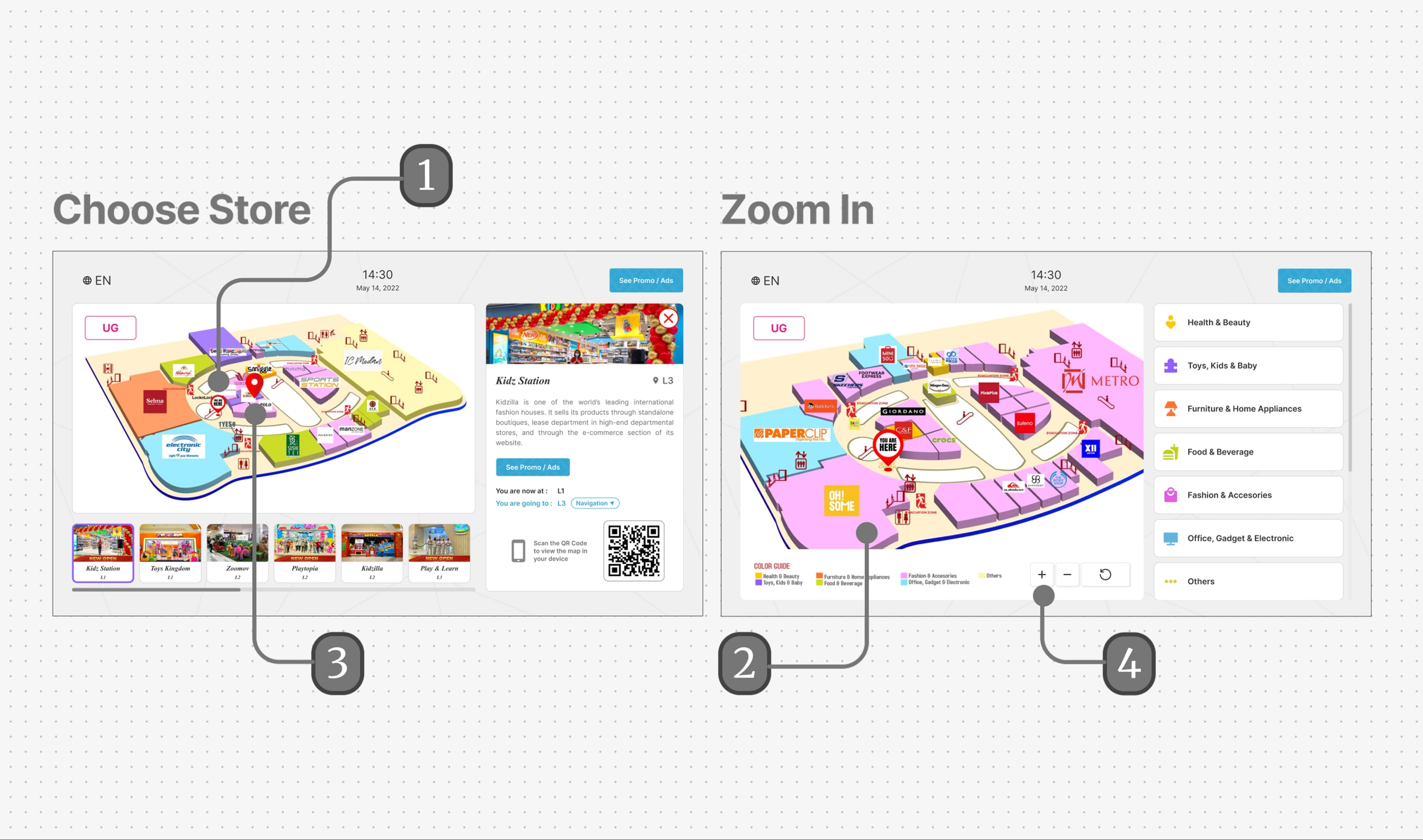
A clear “You Are Here” indicator helps visitors quickly understand their position within the mall.
The 3D isometric map makes it easier to relate on-screen information to the physical environment.
Highlighting the selected destination improves map readability and reduces visual searching.
Adjustable map zoom supports both high-level orientation and detailed route exploration.
Supporting Route Interpretation
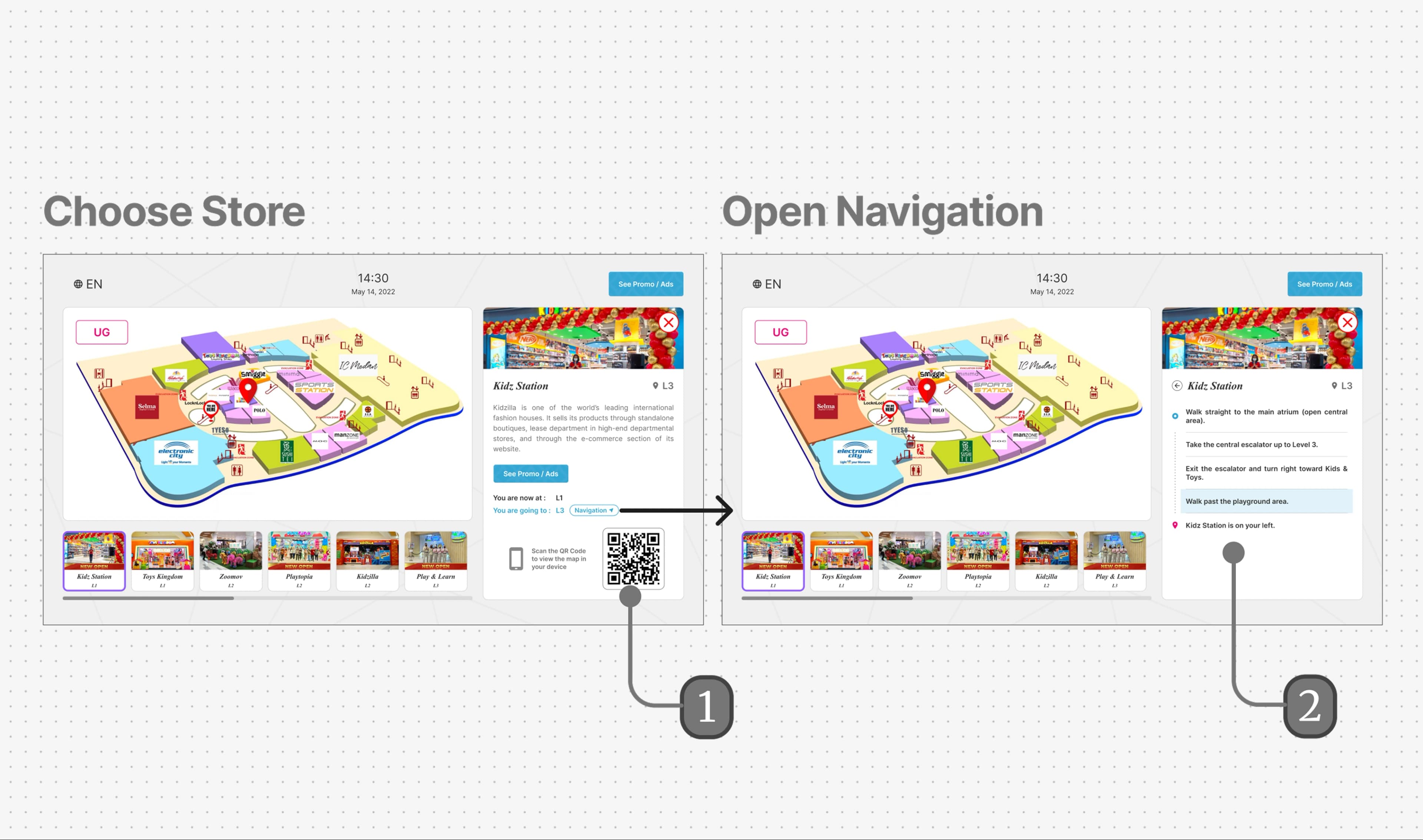
A QR code allows visitors to continue navigation seamlessly on their mobile devices.
Step-by-step directions break navigation into simple instructions that are easier to follow.
Integrating Promotional Content Seamlessly
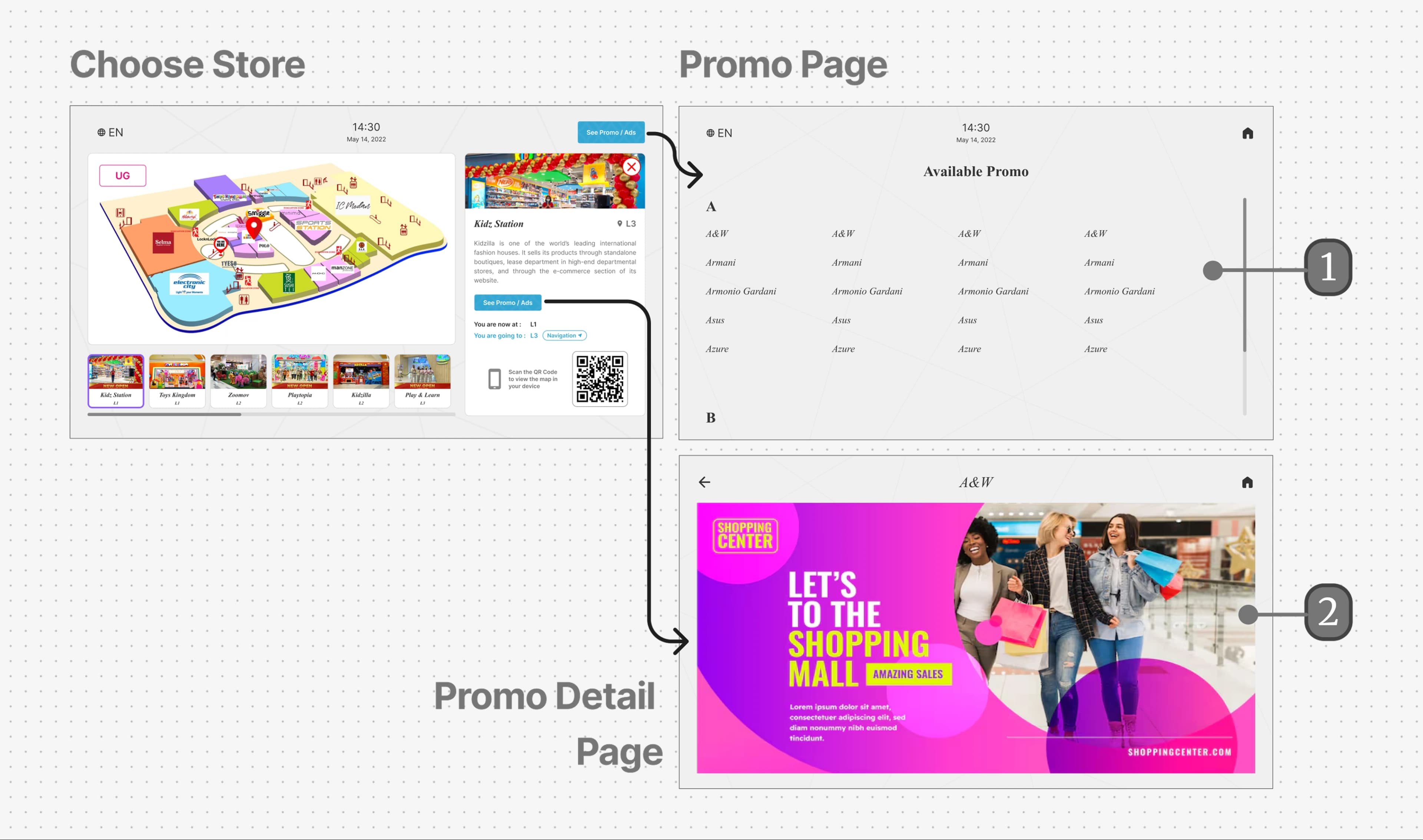
A dedicated promotions section supports business needs without competing with navigation.
Contextual promotions help visitors discover relevant offers while exploring stores.
Outcome
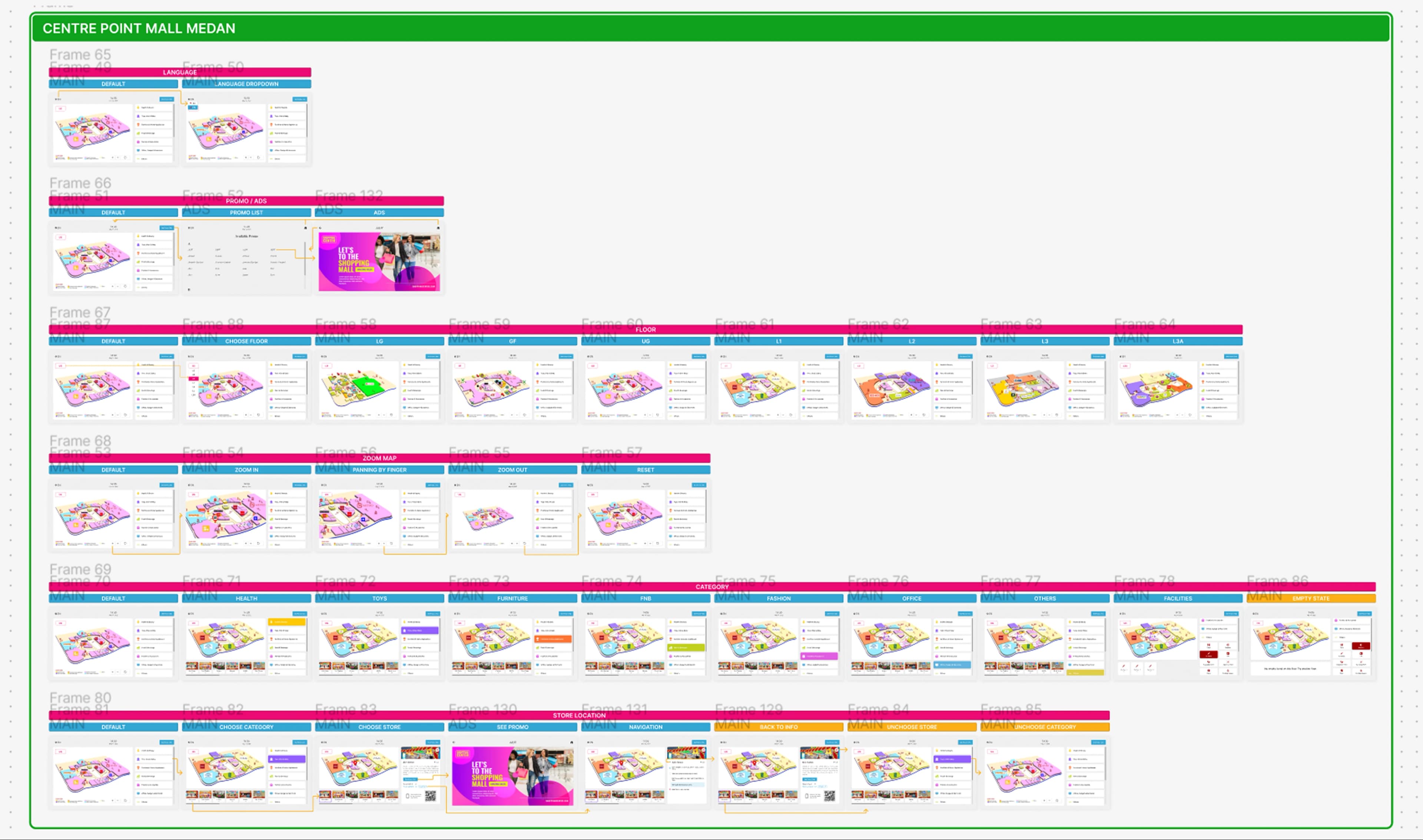
Reflection
Continue exploring
More projects across research, commerce, systems, and spatial experiences.
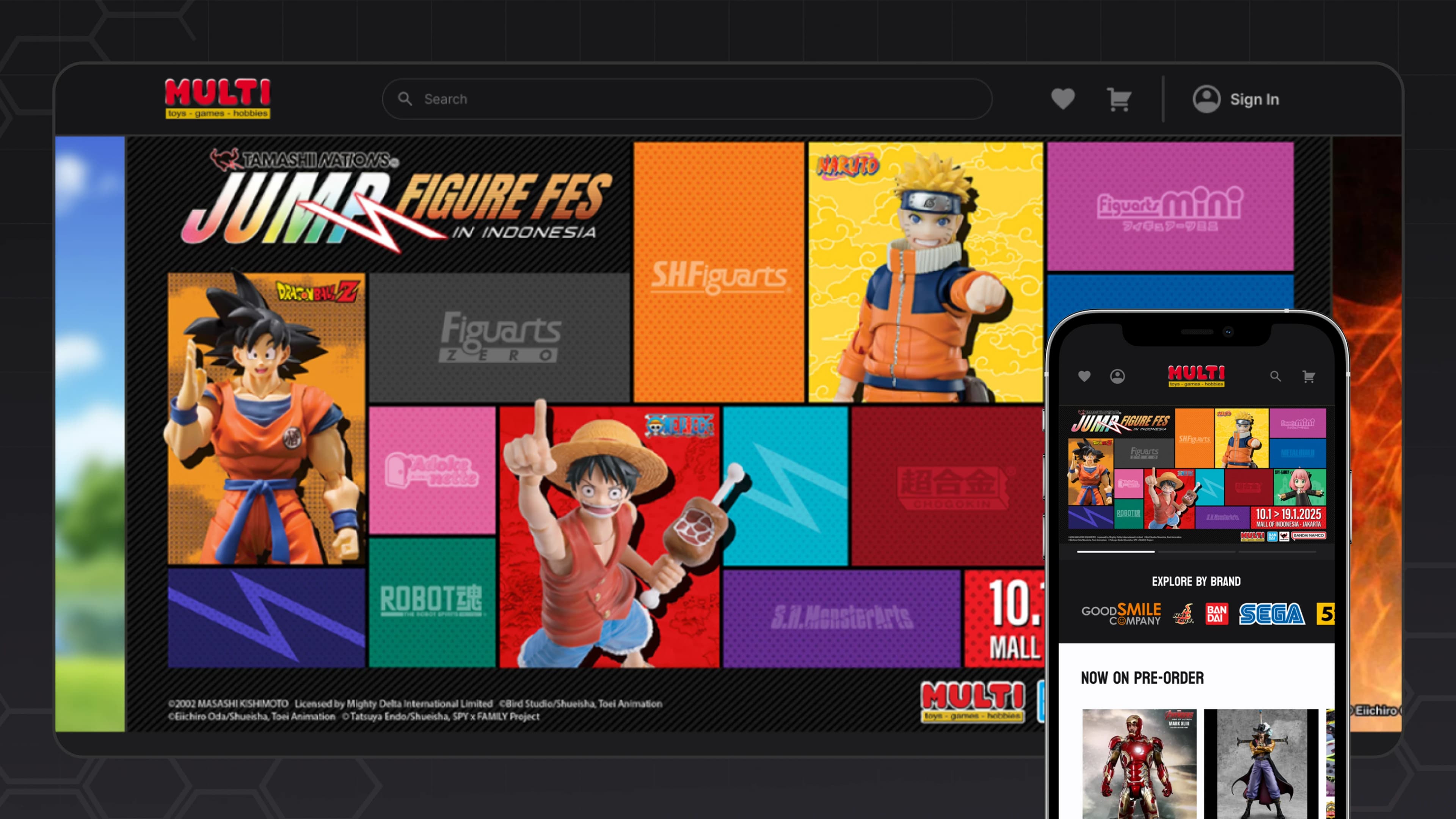
MULTI Toys — Structuring Collectible Shopping Through Clearer Discovery and Purchase Cues
A responsive e-commerce redesign spanning the homepage, catalog, product detail, cart, checkout, and supporting shopping flows.
Redesign · E-commerce · Responsive Web
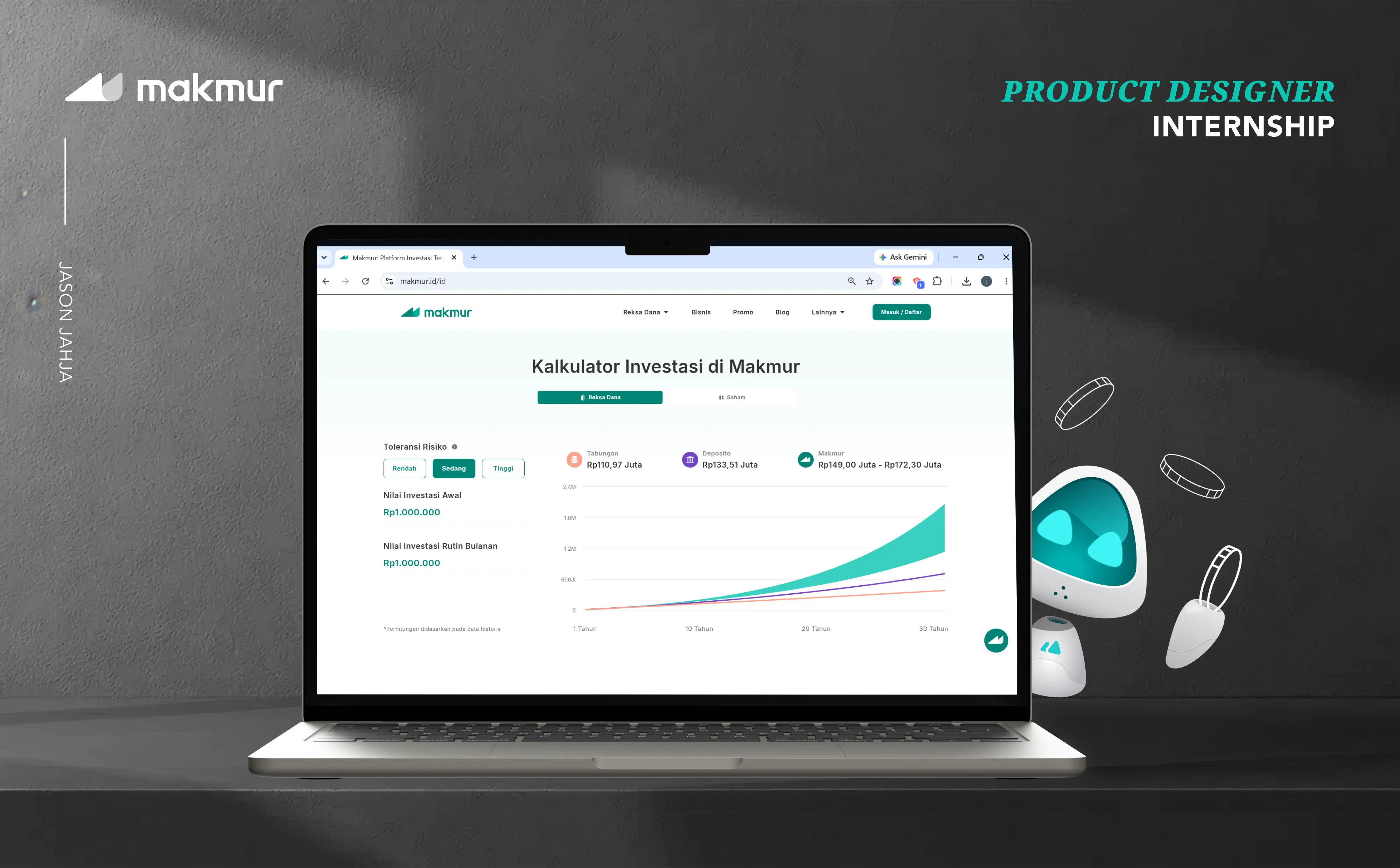
Makmur — Building Consistency Across Design Systems and Responsive Product Experiences
Product work across multiple web and desktop initiatives during my internship, from reusable components to responsive interface behavior.
Design Systems · Responsive UI · Internship
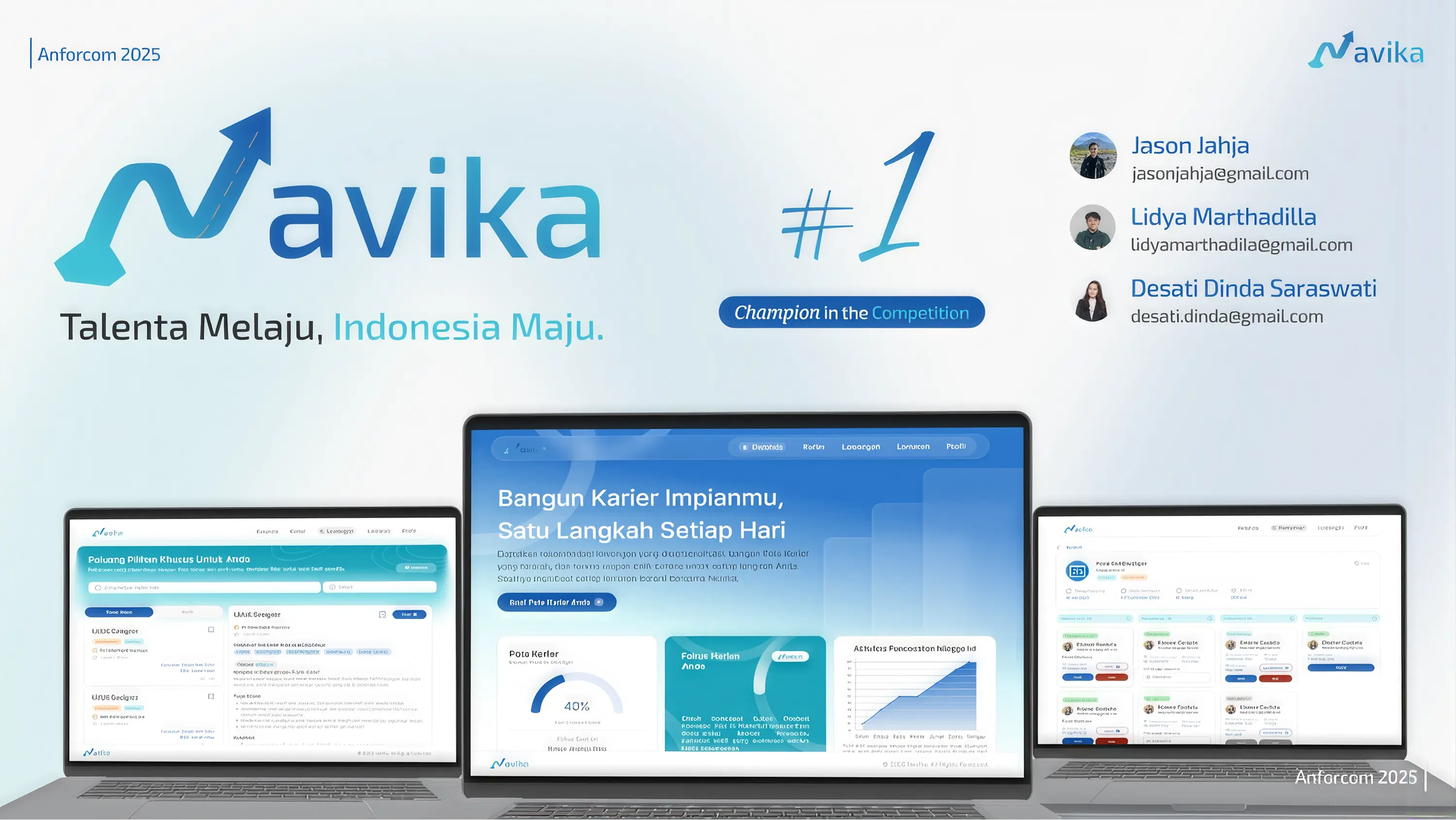
Navika — Designing a More Transparent Job Discovery Experience
A job-platform concept developed for a national design competition around clearer opportunity information and sustainable career exploration.
Job Discovery · Information Transparency · Competition